
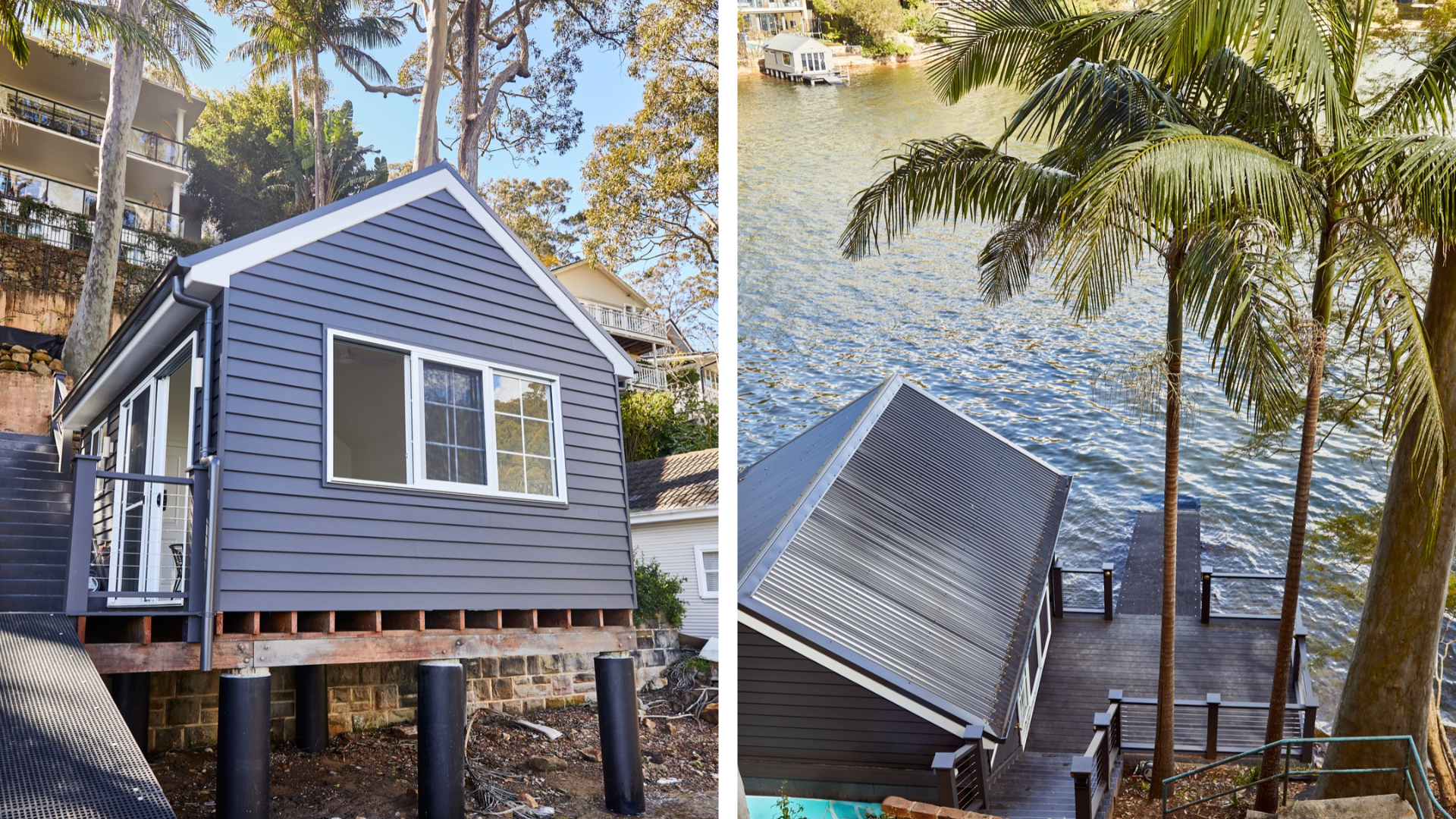
Picture a Saturday morning at Newport. Coffee on the deck, the surf rolling in, and a fine film of salt settling quietly on everything you own. It’s part of the deal when you live this close to the water, and it’s also the reason a coastal house needs to be built differently from one in Parramatta or Penrith.
Salt doesn’t wreck a home overnight. It works slowly, picking at the weakest link, whether that’s a cheap screw, an unsealed edge or a corner that never sees rain. So rather than a shopping list, here’s a walk around a Northern Beaches home from the roof down, showing where the salt goes looking for trouble and what we’d do about it.
The roof: your first line of defence
The roof takes sun, wind and salt spray all at once, so it’s worth choosing a product made for tougher environments rather than a standard sheet. Coatings vary a lot in how they cope near the surf, so ask your builder to match the product to your actual distance from the water.
Read the warranty properly, too. Some coastal roof warranties expect you to wash the sheets now and then, and a roof that’s never been cleaned can quietly void the cover. It’s a small chore that protects a big investment.
Windows and doors: frames, seals and moving parts
Aluminium is a favourite on the coast, but the metal itself is only half the story. The finish does the protecting, so look for coatings rated for marine conditions and check who stands behind them.
Don’t overlook the hardware. Hinges, rollers and sliding tracks are used every day and exposed to salty air, so corrosion-resistant fittings keep a big stacker door gliding instead of grinding. And that tiny screw holding it all together? It matters more than you’d think (more on that below).
Walls: pick a skin that sheds water
Your external walls need to repel moisture, not soak it up. Fibre cement is stable and sheds water well. Brick and block are tough, though the flashings, lintels and mortar joints around them need just as much thought as the bricks themselves. Render can look fantastic too, provided it’s finished with a quality coastal-rated coating and detailed so that water runs away from it.
Decks, pergolas and outdoor living
This is where most Northern Beaches families spend their weekends, so it deserves some care. A dense Australian hardwood has the natural toughness to cope with sun and sea air, as long as you’re happy to seal it regularly. If you’d rather skip the recoating routine, composite boards are worth a look, though they bring their own cleaning habits and price tag.
Whatever you pick, think about the fixings underneath. A beautiful deck held together with the wrong screws will show rust streaks within a couple of years.
Fixings: the unsung heroes
Fasteners are the cheapest items on the job and the most expensive to get wrong. For exposed locations, 316-grade stainless steel resists salt much better than everyday stainless, and hot-dip galvanising is another proven choice. The golden rule is to keep different metals from touching each other, because when two unlike metals meet in damp conditions, one slowly corrodes the other.
The structure beneath: concrete and steel
Salt can work its way into concrete over time and attacSalt can work its way into concrete over time and attack the reinforcing steel inside, which is why a coastal slab isn’t designed the same way as an inland one. Your engineer will set the concrete strength and how much cover surrounds the steel to suit the exposure of your site. It’s invisible once it’s poured, so it’s one of those details that deserves a proper conversation before construction starts.k the reinforcing steel inside, which is why a coastal slab isn’t designed the same way as an inland one. Your engineer will set the concrete strength and how much cover surrounds the steel to suit the exposure of your site. It’s invisible once it’s poured, so it’s one of those details that deserves a proper conversation before construction starts.
Inside the house
Salt doesn’t stay outdoors. Open the sliders on a breezy afternoon and it drifts in with the air. Bathroom tapware, ceiling fans and appliances near open living areas hold up better when they’re chosen with durability in mind. Good airflow helps too: windows placed to catch a cross-breeze keep humidity down and mould away, and make the house more pleasant to live in anyway.
Finishes: paint that actually protects
Think of exterior paint as armour rather than decoration. A premium system made to handle UV and salt will outlast budget products by a long way, but only if edges, joints and cut ends are sealed properly. Water finds the one spot that was missed, so the prep matters as much as the paint.
Design tricks that help the weather help you
- Plan for rinsing. Rain washes exposed surfaces for free, but eaves, balcony undersides and pergola frames stay dry. Make sure you can get a hose to them.
- Send water away. Neat flashings, correct falls and good drainage stop moisture lingering in joints.
- Let air through. Openings that line up with the prevailing breeze keep the house fresh.
Questions to ask before you lock in selections
- How close is my site to the surf, and how does that affect the products you’re recommending?
- Which parts of the house will never get rinsed by rain?
- What do the warranties require me to do, and how often?
- Are the fixings and hardware specified for this environment too?
- What will this cost now compared with what it saves later?
Spending a little more now to spend less later
Coastal-grade materials usually cost more on day one. But fewer repairs, longer gaps between replacements and a home that keeps looking good tend to even things out over the years. When you collect quotes, ask each builder to spell out exactly what’s included so you’re comparing like with like.
If you’d like more on caring for a coastal home after the build, read our posts on coastal home maintenance and maintaining properties on the Northern Beaches. Our guide to choosing the right materials for your custom home build is a handy companion read, too.
Building by the beach with All Innovative Building
We’ve been building and renovating across the Northern Beaches for more than a decade, so we know which details hold up to the salt and which ones don’t. Design, council lodgement and construction all happen in-house, which means materials come up in the very first conversation, long before anything gets ordered.
If you’re planning a coastal renovation or new build and want a straight answer on what suits your site, get in touch with All Innovative Building and we’ll talk it through.